
Federal Custody Release Destinations
USMS custody belongs to the federal pretrial and detainee system. A person may be held in a contract facility, moved between beds, released by federal court order, transferred to another district, or designated to the Bureau of Prisons after sentencing. Each change can end custody at one site without ending federal authority. The receiving agency and federal docket determine what happened next.
If Hennepin County Jail shows a Released Date/Time during a federal matter, check whether the record states a transfer or federal hold. A county exit proves only that HCSO custody ended. The federal docket may show a detention order, release conditions, commitment, designation, or transfer. A later BOP result becomes useful only if the person entered the sentenced federal prison system.
Confirm Federal Custody Releases
There is no general USMS historical public release locator. Begin with the federal court case and the last confirmed holding agency. The USMS custody and detention channel explains the agency role, while the federal docket supplies case-specific orders. Contact the District of Minnesota or holding agency through official channels when the public record leaves the destination unclear.
- Identify the federal case number, full name, and any federal prisoner number.
- Read the docket for detention, transfer, release, sentencing, and designation orders.
- Ask the last holding agency whether custody ended or transferred, within public-data limits.
- Search BOP only when a prison designation or federal sentence makes that system relevant.
- Compare any county Released Date/Time with the federal event sequence.
- Preserve exact agency wording rather than substituting “released.”
A no-result in BOP can mean the person was never designated there, has not appeared yet, or is outside the locator’s scope. It does not resolve pretrial USMS custody. Likewise, absence from Hennepin’s roster may reflect the Sheriff’s limited recent window or a transfer to a different authority.
Federal Custody Release Records
The best federal record depends on the stage. A pretrial release order can set conditions but may not show the minute of physical exit. A holding agency record can show when that site released or transferred the person. A commitment or designation record can point to BOP. After BOP custody, the federal locator may supply a Release Date and status.
| Source | Question it answers |
|---|---|
| Federal docket | What did the court order about detention, release, sentence, or supervision? |
| Holding agency | When did the person leave that bed, and was custody transferred? |
| USMS district contact | Which official channel can address a pretrial custody route? |
| BOP locator | Did a sentenced federal prisoner enter or leave BOP custody? |
| Hennepin roster | When did a separate HCSO custody episode end? |
These records should be aligned by date and identifier. The same name can appear in county and federal systems for separate events. A booking number identifies HCSO custody, while a BOP Register Number identifies the federal prison record. The federal case number connects orders and docket events.
A docket event marked released on conditions describes the court’s authority and terms. It may be followed by administrative steps at the holding site before the person physically leaves. A detention or commitment order can point the other way. If the docket says the person was remanded, “remand” means the court returned or committed the person to custody. Preserve that term and locate the agency that received the person.
Note: A court release order gives legal authority, while the holding record is the better source for actual physical processing time.
Federal Custody Release Contacts
The research does not establish a single Hennepin street address or phone as the universal USMS contract-custody contact. Contract beds can change, and USMS authority is not the same as ownership of a specific jail. Use the official District of Minnesota, USMS, federal court, or confirmed holding-agency channel rather than an invented local facility contact.
U.S. Marshals Service Contract Custody
Authority: federal pretrial and detainee custody
Public route: federal court docket and official USMS district channel
Holding record: confirmed local or contract facility
Later prison route: BOP Inmate Locator
When contacting an agency, provide the complete name, federal case number, approximate detention dates, and a federal prisoner identifier if known. Ask whether an existing record shows release or transfer and the recipient authority. Do not request a narrative that staff would have to create. Privacy and security rules may limit disclosure of a current location.
Federal court records and detention records have separate custodians. The clerk maintains the docket and filed orders. USMS manages federal detainee custody. A local contract facility maintains records within its role, while BOP controls its prison locator and custody history. A clear request names the record owner, precise date range, and existing event field sought. This avoids asking a county jail to explain a federal sentence it did not impose.
Federal Custody BOP Records
If the person was sentenced and designated to BOP, use the BOP Inmate Locator. It searches accepted federal numbers or a name with demographic narrowing. Results can show Register Number, age, race, sex, Release Date, and Location. A result marked “Released” or “Not in BOP Custody” should be quoted as written.
The official BOP records explanation notes that someone outside BOP custody may remain in another correctional or justice system. Federal supervision can also continue after BOP custody. Online federal prison coverage generally extends to people released after 1982; earlier records may require the National Archives.
Search by number when possible. A BOP Register Number is more reliable than a common name, while age, race, and sex help separate name matches. Release Date must be read as part of the result, not detached from Location. If the date is forward-looking or the location still names an institution, verify with BOP before stating that the person has left. If it is past and the status says released, the conclusion remains limited to BOP custody.
- USMS custody
- Federal pretrial or detainee authority, often using local or contract beds.
- BOP custody
- Federal prison or BOP-managed placement after designation.
- Transfer
- Movement from one holding authority to another without community release.
- Supervised release
- A federal court supervision term that can follow physical custody.
Read Federal Release Results
The official federal locator is relevant after a person enters BOP custody, not as a universal USMS pretrial search.
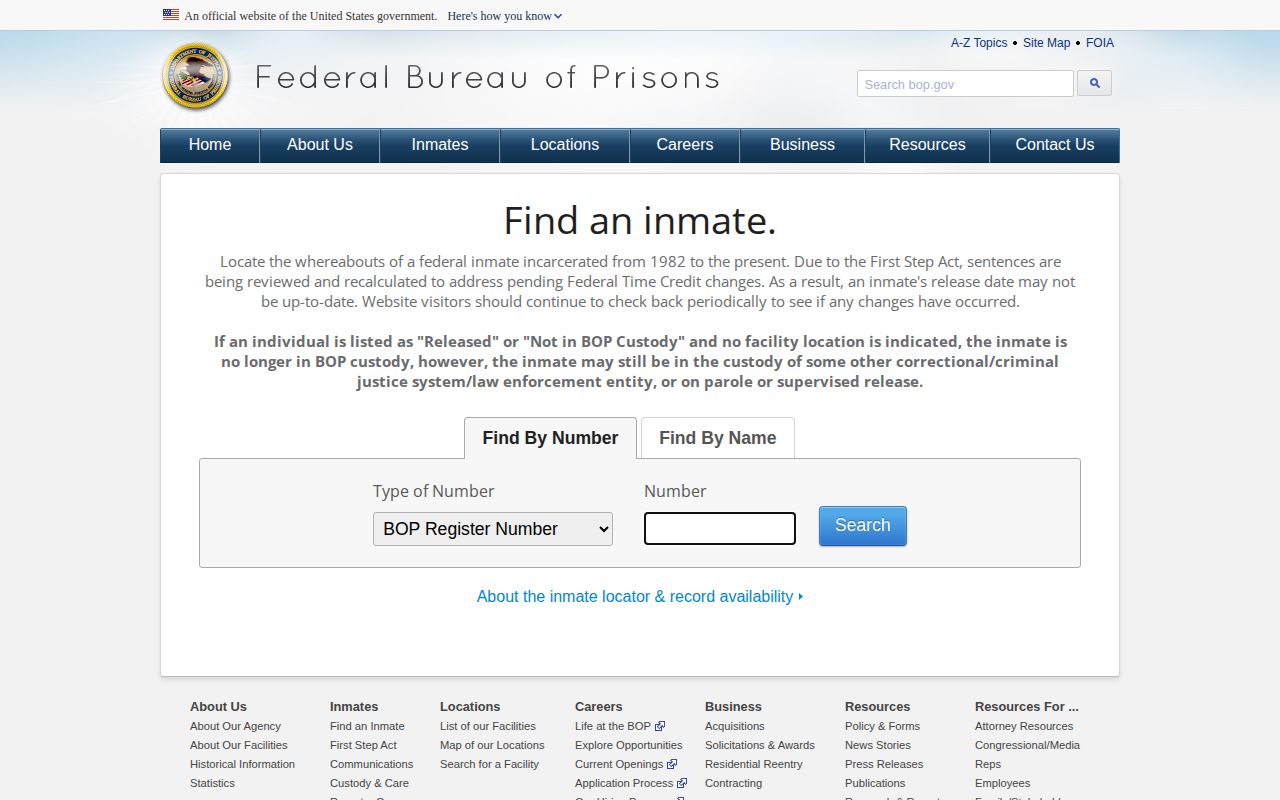
The search form illustrates why a federal identifier and demographic match are needed before a release date is tied to the right person.
The BOP status explanation supplies the necessary scope limits.
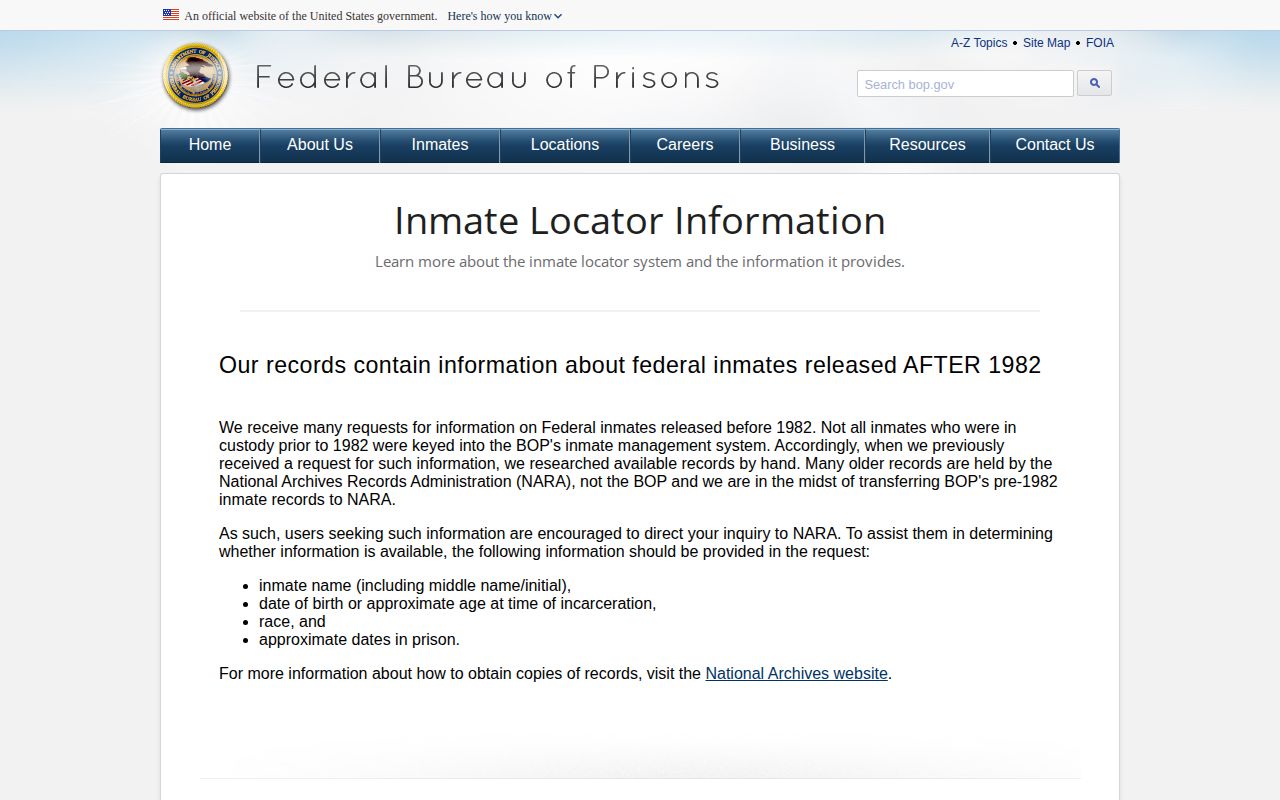
The explanation supports a narrow conclusion about BOP custody while leaving USMS, state, local, immigration, or supervision status for separate verification.
Map Hennepin Federal Transfers
Hennepin’s local map has several distinct doors. HCSO runs one downtown jail in two adjacent buildings. DOCCR runs the sentenced ACF in Plymouth. Neither is a federal prison. A federal detainee may occupy a local or contract bed while USMS remains the controlling authority, then move without entering the community.
RRM Minneapolis is also not a conventional prison. It is a BOP office managing community-placement relationships. FPC Duluth, FMC Rochester, and FCI Sandstone are federal institutions elsewhere in Minnesota. Routing by operator and custody stage prevents a county roster, USMS detention, BOP prison term, and RRM placement from being merged into one false release event. The Hennepin release-record search supplies the county side when an HCSO booking preceded federal transfer.
Build the timeline from agency handoffs. Record the HCSO exit and recipient, then the federal detention order, each known holding site, sentencing and designation, BOP status, and any later RRM placement or court supervision. The result may show several facility exits but only one eventual return to the community. A transfer field is the safeguard against treating every departure as freedom.
Date Federal Release Checks
Record the date each official system was checked. A county roster entry can age out, a contract holding site can change, and a BOP location can update as custody advances. The federal docket remains the court-event timeline, while the holding record supplies physical movement. Dating each observation makes a later status change understandable and prevents an older screen from being reported as current federal custody.
When two official records appear to conflict, compare their timestamps and scope first. A court order may precede physical processing. A county transfer can precede a federal locator update. Ask the office that created the disputed field to clarify it, and preserve the response with the case and prisoner identifiers.